
5-Factor Sales Mastery™
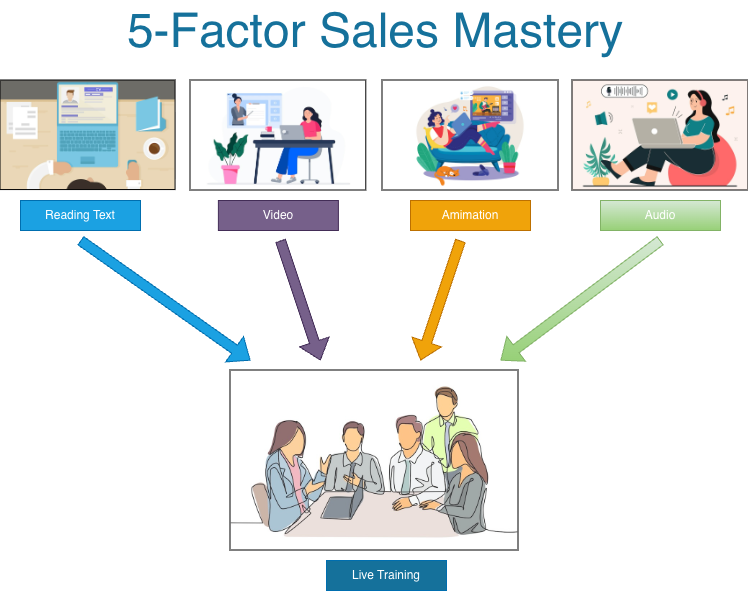
5-Factor Sales Mastery™
A structured system combining five proven learning modes to accelerate competence, retention, and real-world execution—grounded in learning science for repeatable results.
Introduction
Few reps were ever taught how sales actually works — yet sales remains one of the few careers where skill can still create independence without advanced degrees, years of unpaid internships, or climbing corporate ladders.
Independent sales is a practical alternative to salary jobs. It provides control over income through skill, not credentials. Your effort and self-reliance is rewarded. This is in contrast to traditional corporate roles that often limit autonomy, suppress initiative, and fail to provide long-term security.
This program does not rely on hype, hustle culture, or motivational fluff. It teaches sales as a professional skill, using a proven multi-mode learning system designed for real mastery.
The 5-Factor Sales Mastery Course™ is a synergistic combination of complementary learning modes. Each mode by itself is well-proven. The 5-factor approach uniquely enhances fast initial learning, true deep comprehension and long-term retention through rigorous application. It is firmly based in science and proven psychological concepts as opposed to mythology, hearsay and sloganeering.

Mode #1 Foundation Knowledge – Reading
Implementation. Reading.
Source. Complete Guide to Sales Mastery. Ebook with 54 short focused chapters covering virtually all relevant sales concepts.
Advantages. Provides a comprehensive overview setting the stage for the next modes.
The Science. Key Aspects of Learning by Reading
Reading as learning mode means shifting from passive reading to active engagement, turning text into knowledge by using strategies like note-taking, questioning, summarizing, and connecting to prior knowledge. This is essential to build comprehension, vocabulary, and deep understanding, not just decoding words.
◇ Active Engagement: Instead of just seeing words, you’re actively processing, questioning, and integrating information.
◇ Text-Based Learning: Ideal for those who learn best through text, notes, books, and written summaries, making note-taking crucial.
◇ Comprehension First: Focuses on making meaning from the start, not waiting until later; understanding the “why” behind the words.
◇ Building Knowledge: Reading becomes a primary tool for acquiring new vocabulary, language skills, and a broader knowledge base.

Mode #2 Demonstrated Realism – Videos
Implementation. Watching and listening an actual person recorded live.
Source. 22 Instructor-led videos (3–10 minutes each).
Advantages. Provides in-depth presentations of sales concepts and career realities.
The Science. Key Aspects of Learning by Video
Using videos as a learning mode leverages their multi-sensory, engaging nature to demonstrate processes, cater to visual learners, and offer self-paced flexible instruction through features like pausing and rewinding. Complex topics are made more accessible supporting diverse learning styles for better comprehension and retention. Effective video learning integrates visuals with audio, interactivity (like embedded questions), and storytelling, moving beyond passive watching to active participation for deeper engagement.
◇ Multi-sensory Engagement: Combines audio, visuals, animation, and text for richer experiences than text alone, increasing attention and memory.
◇ Flexibility and Pace Control: Learners can pause, rewind, and rewatch, fitting education into their schedules and learning styles.
◇ Accessibility: Features like subtitles and asynchronous access cater to individual needs and different learning environments.
◇ Demonstration: Ideal for showing processes, simulations, or real-world scenarios that are otherwise inaccessible.

Mode #3 Conceptual Imagery – Animations
Implementation. 5 animations to illstrate critical concepts.
Source. 5 carefully crafted animations (3–5 minutes each).
Advantages. Abstract animations—rather than strict realism—can foster suspension of disbelief and subconscious adaptation, helping break ineffective habitual patterns. Reinforces critical path concepts in an entertaining way making it easier to adapt to a more effective methodology.
The Science. Key Aspects of Learning by Animations
Animations function as a powerful learning mode by making abstract concepts concrete, demonstrating dynamic processes, increasing engagement through storytelling, and catering to diverse learning styles (especially visual) to build stronger mental models and improve memory retention, effectively transforming complex information into memorable, digestible visual narratives that boost motivation and understanding.
◇ Simplifies Complexity: Animates difficult-to-visualize processes and abstract ideas, making them easier to grasp.
◇ Boosts Engagement: Captures attention, reduces boredom and increases motivation through storytelling, character interaction, and emotional connection.
◇ Improves Memory: Visual cues, dynamic sequences, and narrative structures help learners build stronger, more accurate mental models, leading to better retention.
◇ Supports Different Learners: Provides visual aids and auditory cues that benefit visual and auditory learners, creating a more inclusive learning experience.
◇ Provides Clear Guidance: Uses visual hierarchy and animated transitions to direct focus and guide users through steps reducing cognitive load.

Mode #4 Subconscious Integration – Audios
Implementation. Auditory allowing for free imagination and subconscious programming.
Source. 14 In-depth long-format audios (about 1 hour each).
Advantages. Deep dives into major sales topics for long-term retention. Ideal for listening during commutes, walks, or downtime. The prevalent use is music which bypasses the consicous mind connecting directly to the subconsious invoking emotive responses.
The Science. Key Aspects of Learning by Audio
Audio as a learning mode leverages the sense of hearing for better comprehension. This accommodates auditory learners through enhancing literacy, memory (echoic memory), and focus by reducing visual distraction.
◇ Enhances Focus: Removes visual distractions, allowing deep concentration on auditory content.
◇ Reduces Cognitive Load: Focuses on hearing, making complex info more accessible.
◇ Sparks Imagination: Encourages listeners to create mental images.
◇ Boosts Memory: Leverages echoic memory, which retains heard info longer than visual memory.
◇ Develops Critical Skills: Conveys tone, inflection, and emotion often missed in text.
◇ Increases Flexibility and Accessibility: Great for multitasking, people with limited data, and creating content easily.
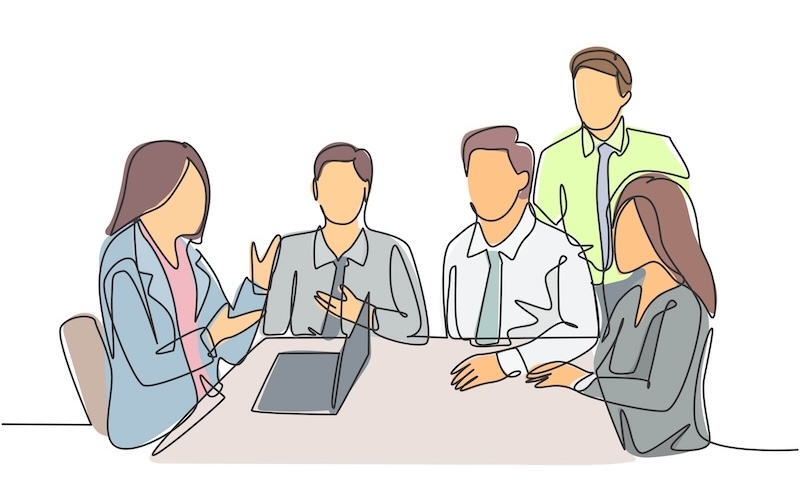
Mode #5 Practical Implementation – Live Training
Implementation Interactive participatory learning.
Source. Weekly live group calls.
Advantages. Advanced topics and open Q&A. Live role-play with feedback. Coaching from expert instructor and group feedback for reality checks. A sense of community that allows persistance in the face of adversity.
The Science. Key Aspects of Learning by Practice
Practice as learning mode means actively engaging in tasks to build skills, deepen understanding, and move knowledge from short-term to long-term memory, often through “deliberate practice” (focused, goal-oriented repetition with feedback) or “practice-based learning” (learning from real-world experience) rather than just passive study, reinforcing concepts through doing, application, and error correction for true mastery.
◇ Active Application: Moving from theory to action, applying knowledge in practical situations.
◇ Goal-Directed: Focusing practice on specific targets with clear objectives, not just aimless repetition.
◇ Feedback Loop: Receiving immediate feedback (from self, instructor, or outcomes) to adjust and improve, crucial for correcting errors.
◇ From Short-Term to Long-Term: Reinforcing new information so it becomes ingrained and easily accessible.
◇ Deliberate Practice: High-intensity, focused practice designed by an expert, involving clear goals and immediate feedback, essential for expertise.
◇ Practice-Based Learning: Learning directly from real-world experiences and genuine professional environments, a hands-on approach

Who This Program Is For
◇ Reps starting out realizing their training is lacking and failure is a real probability.
◇ Early-stage sales reps who want to ramp to the Top 10% to earn more.
◇ Displaced workers giving up on waiting for a salary job after sending thousands of resumes.
◇ Enlightened individuals that seek a real life with independence and personal freedom.
◇ People stuck in dead-end wage-slave jobs with no chance of a middle-class lifestyle.
◇ Individuals that after years of fruitless labor and insecurity want to work remote 10 hours a week to pursue their passions.
◇ Next generations recognizing the futility of college with its false promises of waiting jobs risking years and huge loan debts that can never be paid off.